A Long Lap around a Short Circuit -Targa Florio
Asked to name some long racing circuits, most Australian enthusiasts would start with Mount Panorama at Bathurst (6.2km), then their thoughts would probably turn to Circuit de la Sarthe at Le Mans (13.6km) and then drift north-east to Germany and the old Nürburgring (Nordschleife) at 20.8km. Now consider a circuit that, at 148km was more than six times longer than Nürburgring’s famous “Green Hell” and was eventually shortened to “just” 72km before eventually being deemed “too dangerous” and abandoned nearly 50 years ago.

Asked to name some long racing circuits, most Australian enthusiasts would start with Mount Panorama at Bathurst (6.2km), then their thoughts would probably turn to Circuit de la Sarthe at Le Mans (13.6km) and then drift north-east to Germany and the old Nürburgring (Nordschleife) at 20.8km.
Now consider a circuit that, at 148km was more than six times longer than Nürburgring’s famous “Green Hell” and was eventually shortened to “just” 72km before eventually being deemed “too dangerous” and abandoned nearly 50 years ago.
I first became vaguely aware of the Targa Florio in my pre-teen years when a book - or perhaps a documentary on mid-summer TV; it was a few years ago now - provided my first glimpse of this audacious race. Later, film nights with MUCC (yes real 16mm films projected onto a wall in a meeting room at Union House) provided both a visual and aural feast to augment this early taste[i]. In its day it was as significant a circuit and race as the Le Mans 24 hours or the old Nürburgring but a "street' circuit in the most literal sense of the word with full-house sports racing cars blasting down the main streets of normally quiet hillside villages, with just a few hay bales marking the line between race track and street-side café, before attacking the winding roads that separated one township from the next.
A family holiday to Italy a few years ago which included a few days in Sicily, provided the opportunity to fulfil one of my motorsport dreams by driving a lap of the circuit.
When discussing "the circuit" of Targa Florio it is important to define your terms, as there have been several widely different variations since the inaugural event in 1906, ranging in length from 72km to more than 1000km (a lap of Sicily) although in terms of a defined circuit with fixed infrastructure there were three distinct incarnations as the roadside map posted at the original start/finish line shows.
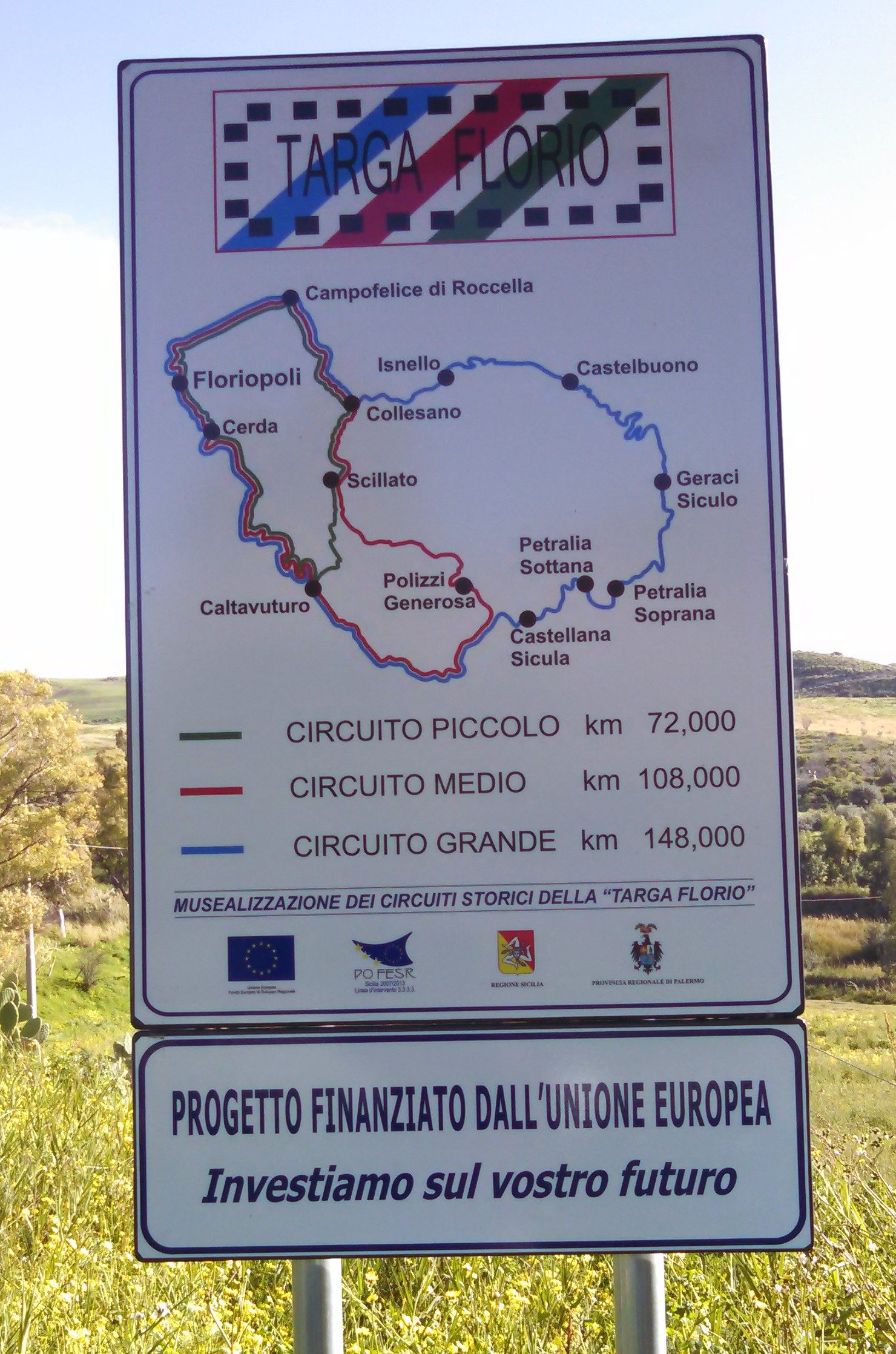
While I briefly considered tackling the 148km "grande" version of the course on which the inaugural and many early events were run, I opted for the shortest configuration which was used from 1932 to 1936 and then from 1951 until the final running of the race in 1978.
My choice of the "piccolo" circuit was a pragmatic one giving heed to the level of interest of my travelling companions (medium to low) their fear threshold (medium to very low) and reports I had read regarding the condition of the roads.
To say the road surface was poor in places would be risking accusations of understatement. The mountain roads on which the race was run are in an area known for geological instability. At the eastern end of Sicily is an active volcano (Mount Etna; which had erupted spectacularly just weeks before our arrival) so earthquakes and associated land displacement around the island are not uncommon. Consequently the decades that had passed since the last running of the race were not kind to the roads, and a new highway running up the valley to Catania on the eastern coast made maintenance and repair of some sections of road less important for the locals - and non-motorsport tourists -than it might otherwise have been.
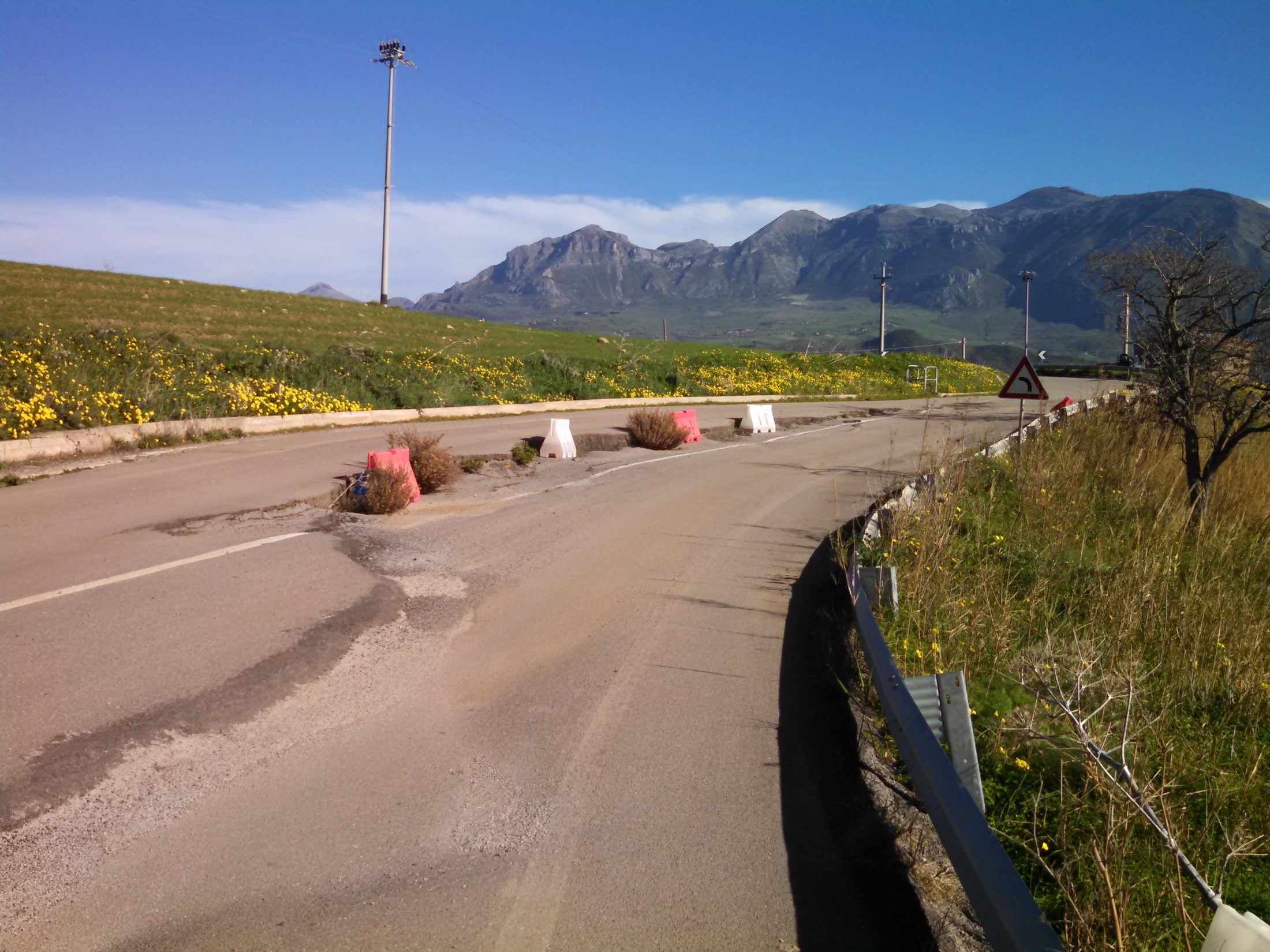
In some places the road surface was completely non-existent, with entire sections of road having slipped down the hill taking the armco barriers with them. In other places the earth movement was less extreme - or perhaps just incomplete - leading to interesting split level effects, sometimes with a small shrubbery in between (with apologies to the knights who formerly said "ni"). In other places still, a more wavelike surface was experienced giving new meaning to the phrase “undulating road". Many of these irregularities were prefaced by the standard Italian/European caution sign, being an exclamation mark on a triangular background, a little like a rally caution board, however these signs have only a single exclamation mark whereas many of the imperfections deserve to be treated as double, if not triple, cautions.
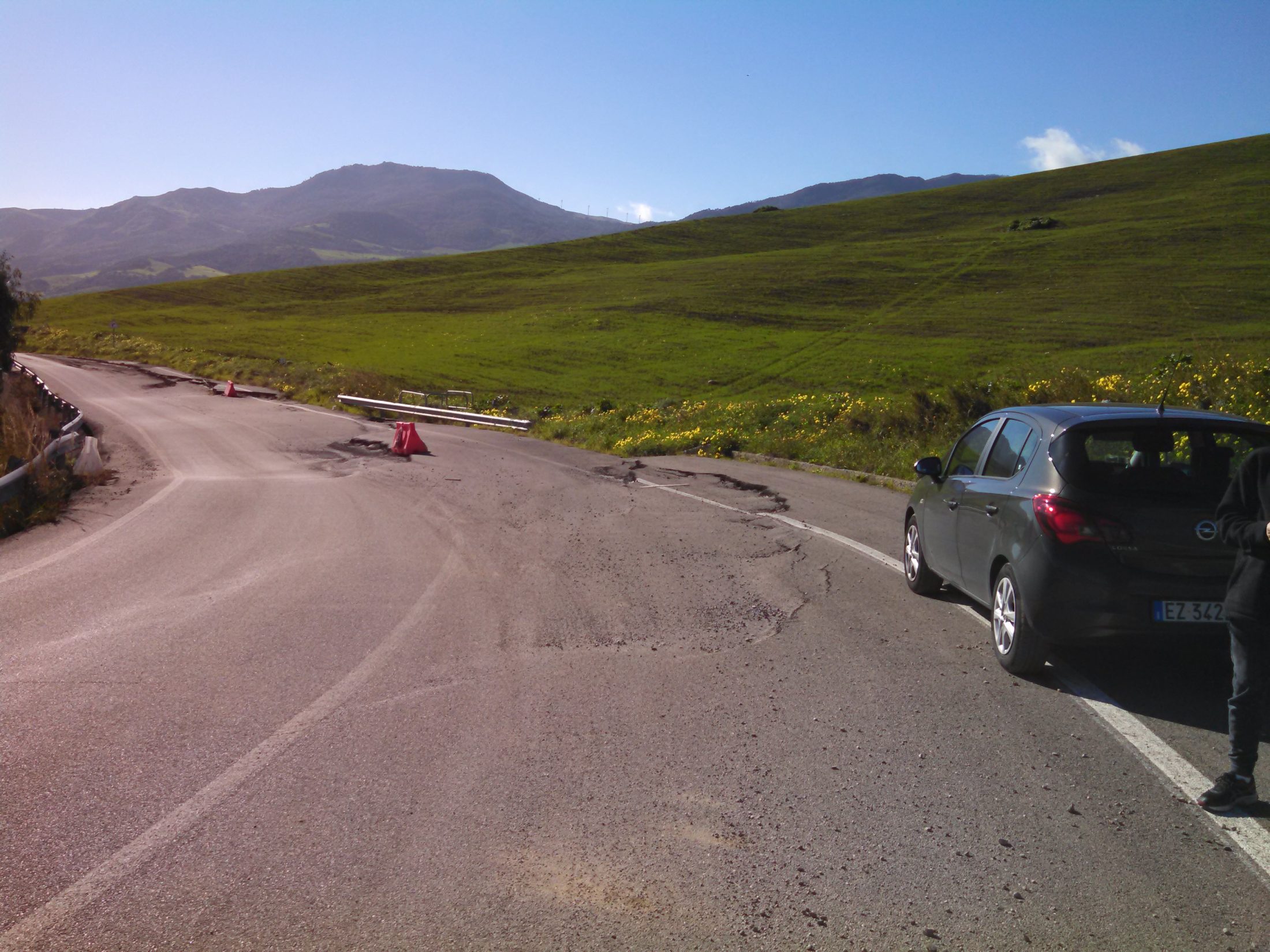
In any case the ideal choice of vehicle is NOT something low, fast or expensive. Our rented 2015 Opel Corsa 1.2 “N-Joy” (...seriously - this is the model designation for this variant in Italy) coped with the conditions creditably well, having decent ground clearance and good attack and departure angles. I scraped the front lip once on what should have been marked as a triple caution, but it otherwise survived the lap unscathed.
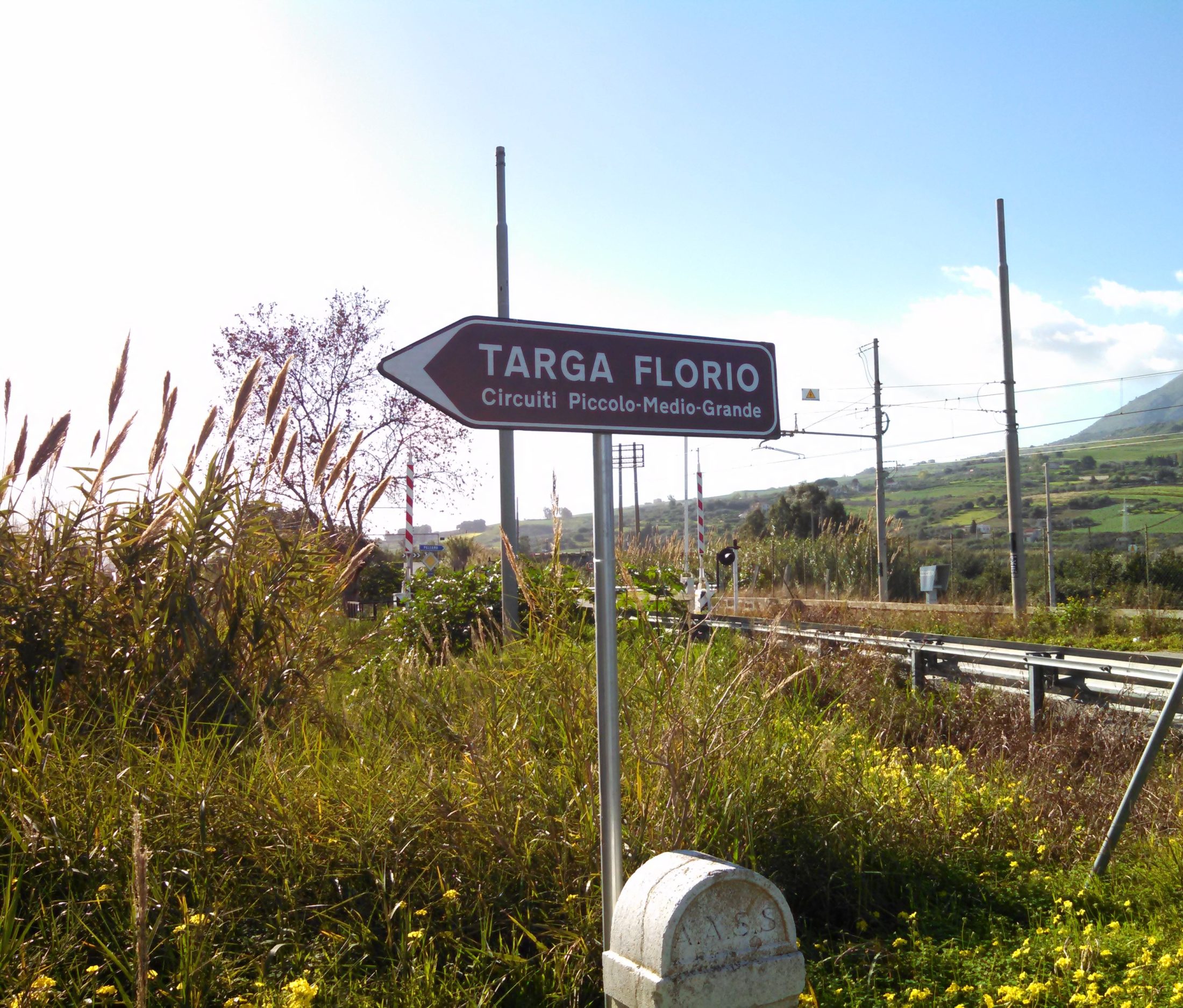
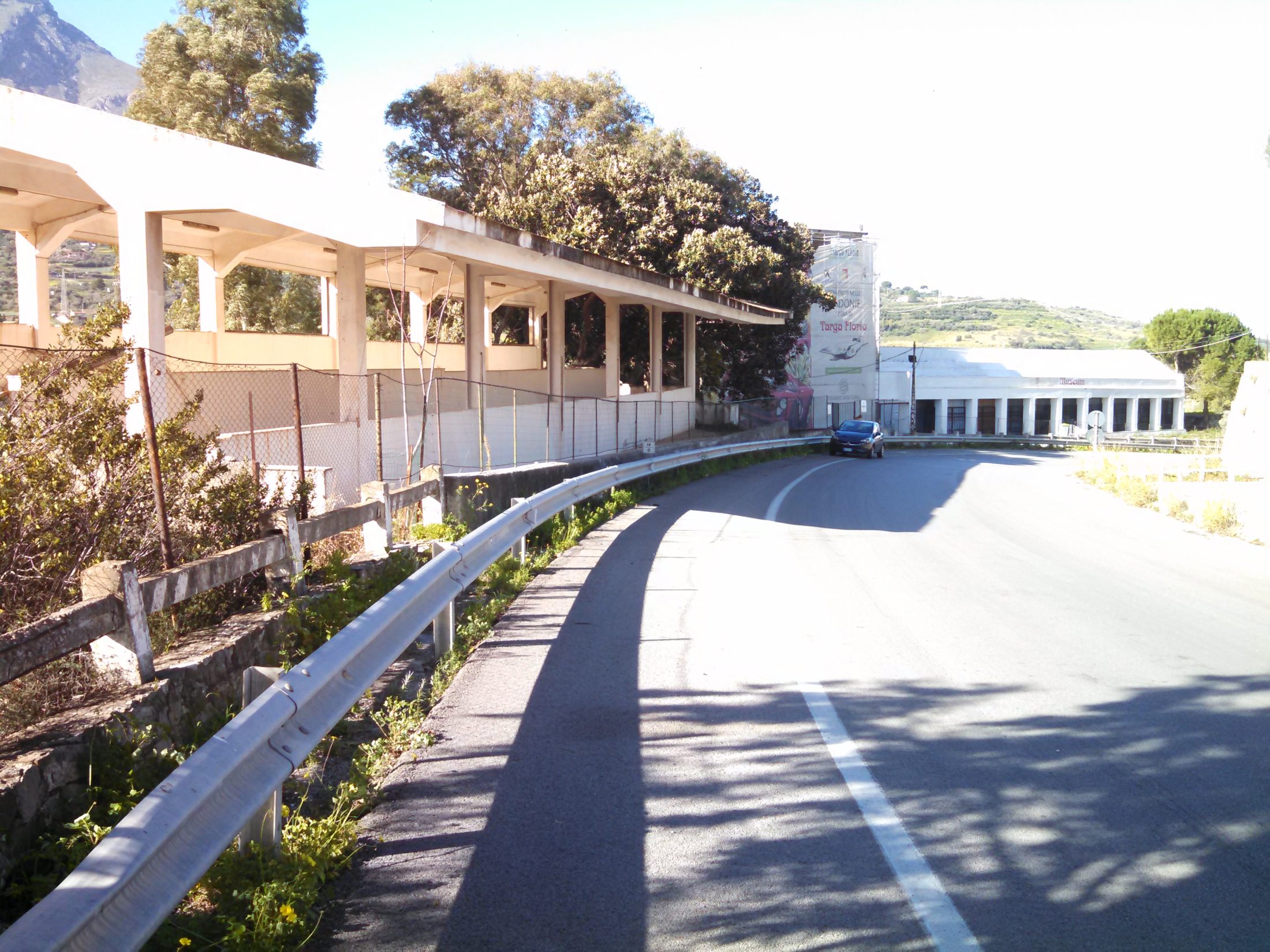
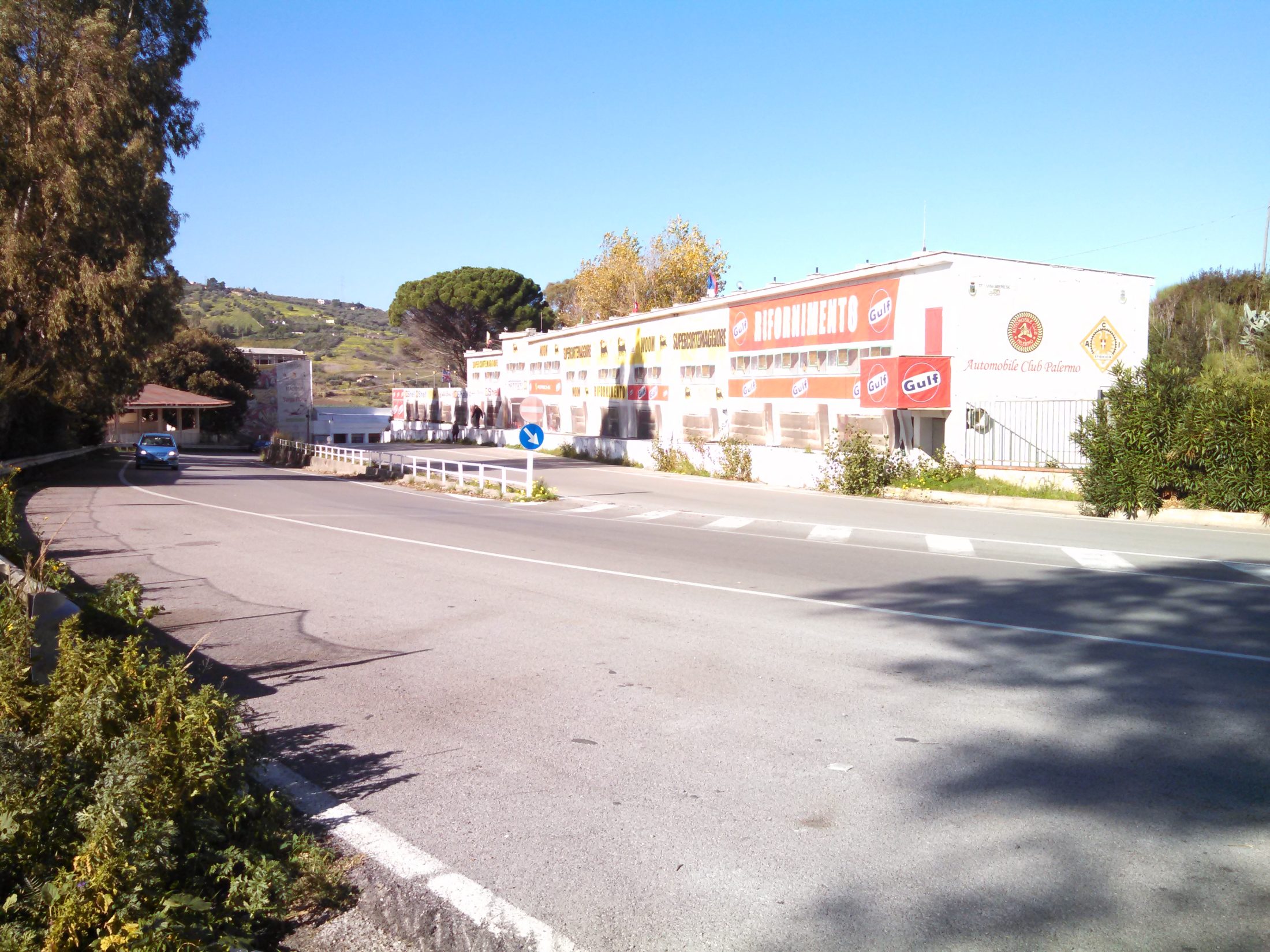
Our journey started from Sicily’s capital Palermo with an hour's drive to intersect the old front straight, accessed via an industrial park, with then a few kilometres to the start/finish line and the abandoned pit buildings about 5km north of Cerda. Here the otherwise narrow road widens to provide a broad starting lane and a generous pit lane. One assumes that locals know what it is all about as there are numerous signs both at this location and around the course that (literally) signpost the history of the race.
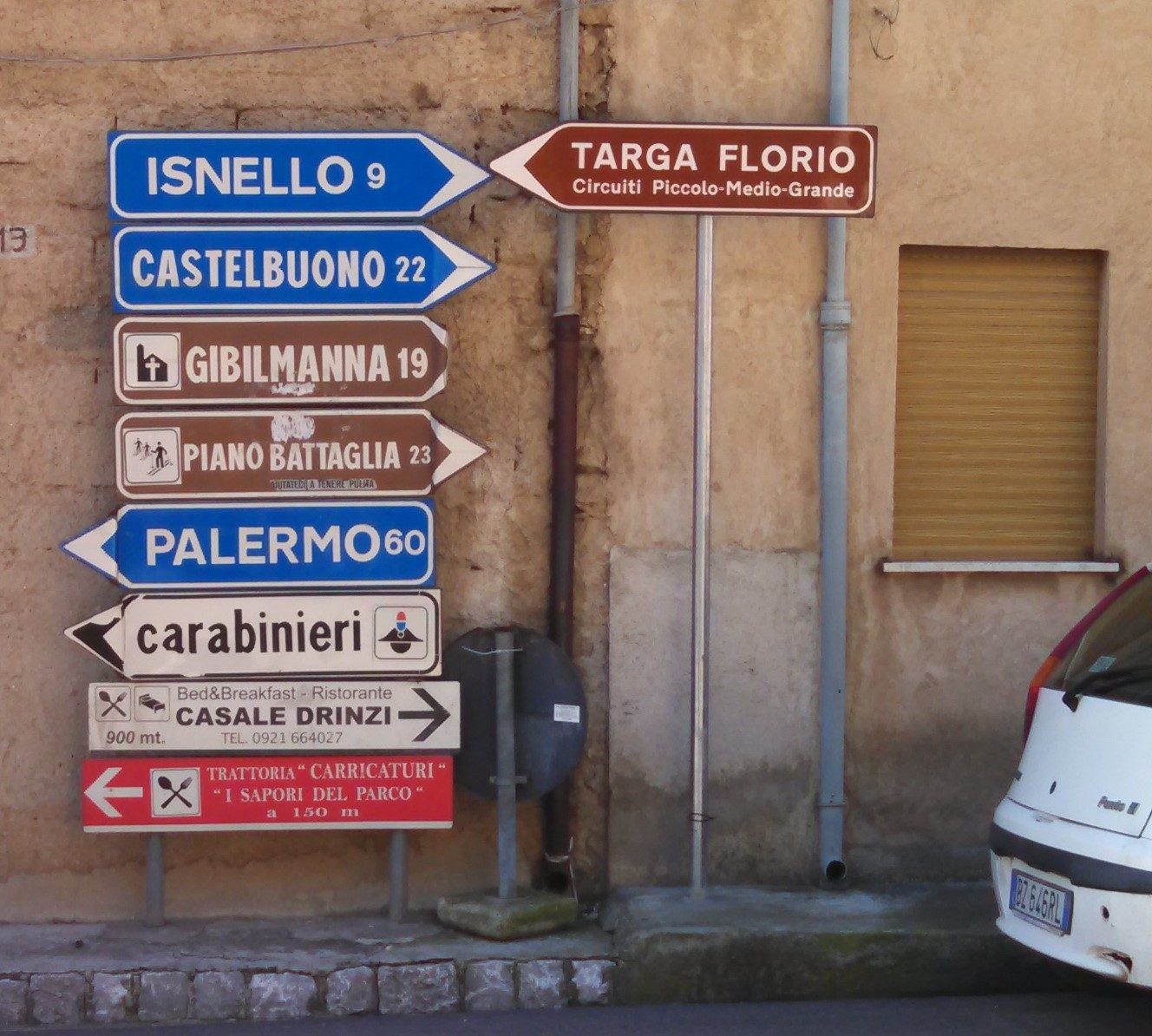
Interestingly it seems not well known beyond the immediate vicinity of the circuit. The attendant at our parking station in Palermo - whose English was far superior to my Italian (not hard) - was unfamiliar with the name Targa Florio when I tried to explain where we'd taken the car during the day. This despite Vincenzo Florio Snr, having been the patriarch of a significant local family who had made notable developments in local agriculture and industry, being commemorated with a large statue on the foreshore and whose grandson - Vincenzo junior - had been the instigator of the race. Clearly the history syllabus in local schools needs an overhaul.

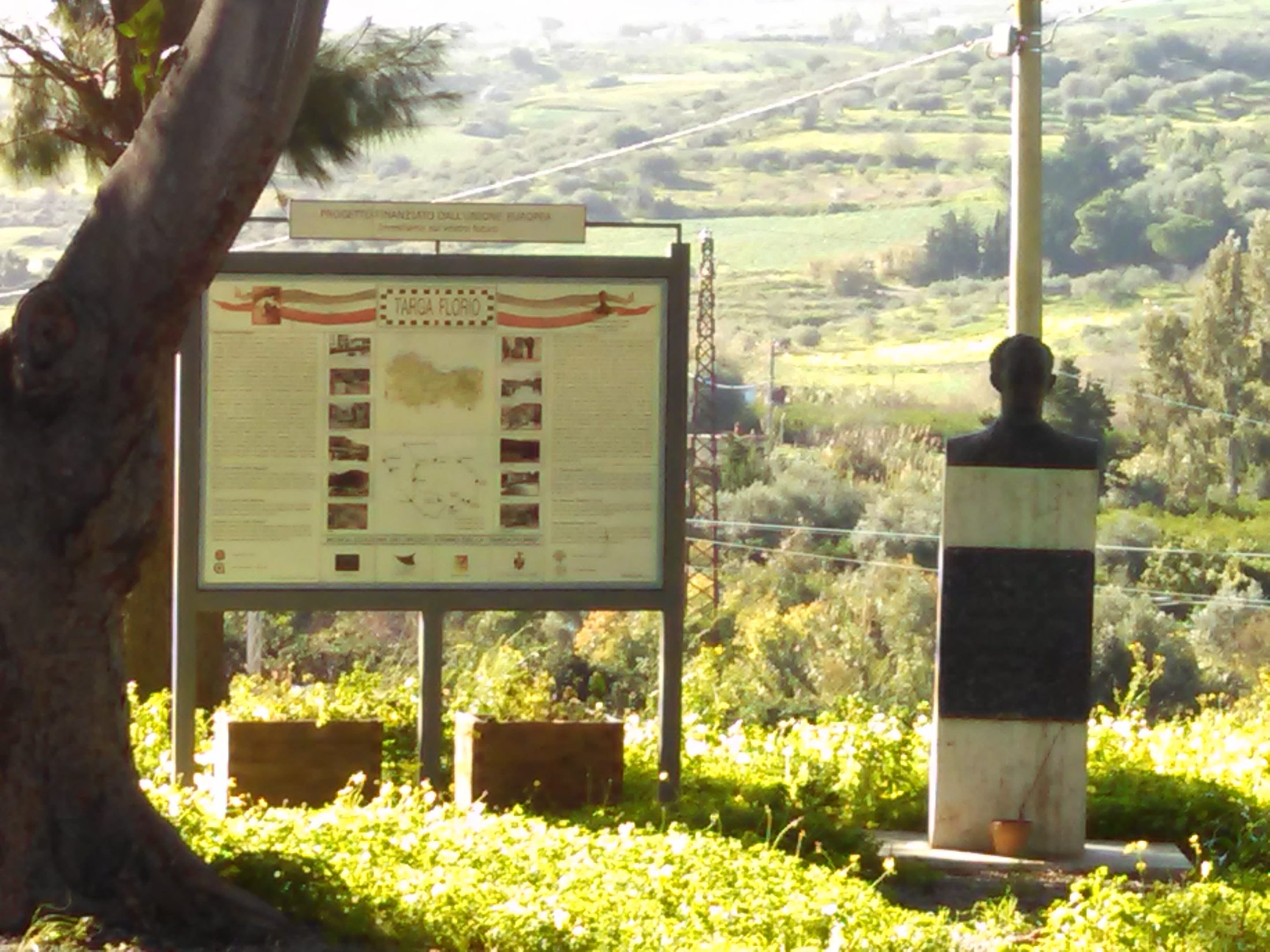
The pit buildings and grandstands, abandoned since the last race in in the late 1970s, are not surprisingly in a poor state of repair, although with the more recent revival of the event as a classic car rally some attempt has been made to protect the buildings and dress them up a little. Behind a locked gate underneath a couple of fig trees is a bust of Vincenzo Jnr and adjacent a sign in both Italian and English with a potted history of the race. Fortunately this sign also appears later on in the route so I was able to capture the relevant parts.
From the start line we commenced the 5km run up to Cerda, the first town on the course. The road was a narrow two-lane affair in reasonably good condition with armco barriers on most corners. Keeping an eye on the local traffic ahead of us I caught occasional glimpses of bucolic scenes and rugged hills across the valley to the east as we started climbing.
In Cerda all the vehicles ahead of us turned off, so we negotiated the surprisingly steep climb through the town with no escort. Beyond Cerda the road conditions deteriorated noticeably. Despite this I still found myself with a couple of locals on my back bumper after only a few kilometres. Pulling over to let them pass I saw that even with their obvious benefit of local knowledge, they did not draw away from us that quickly - the road was just so poor. Also of note is that their cars were similarly modest like ours - a Renault Clio (base model) and Fiat Punto respectively. This 20km section, from Cerda to Caltavuturo was easily the worst of the lap with surface completely gone in a couple of places and a variety of splits and undulations the like of which I have never before seen in a bitumen road. The example pictured is around a 4 out of 10 in terms of seriousness. It simply wasn't safe to stop to try to photograph some of the more extreme defects.
Approaching Caltavuturo we passed the road to Scillato - where latter day racers on the short course would have turned left, carrying on instead as earlier competitors on the “medio” or “grande” circuits would have done to 14th century village of Caltavuturo itself where we stopped for a coffee and to sample the wares of the highly recommended Pasticcera Siragusa (I too can highly recommend it). After a simple lunch of ham rolls and fruit eaten in the piazza in front of the church, we back-tracked to the turn off and the road to Scillato. The road surface on this 8km stretch was better, but only in a relative sense as land slips and earth-quakes had not left it completely unscarred. The last couple of kilometres into Scillato was steep downhill though a couple of switchbacks then passed under the new highway before wending its way up the other side of the valley towards Collesano.
The 14km to Collesano afforded some wonderful views both across and down the valley, the latter extending to the beach-front abutting the Mediterranean where we had first joined the circuit. Here the roads showed signs of having been actively repaired in places, however the odd undulation or land slip was still waiting to catch the unwary.
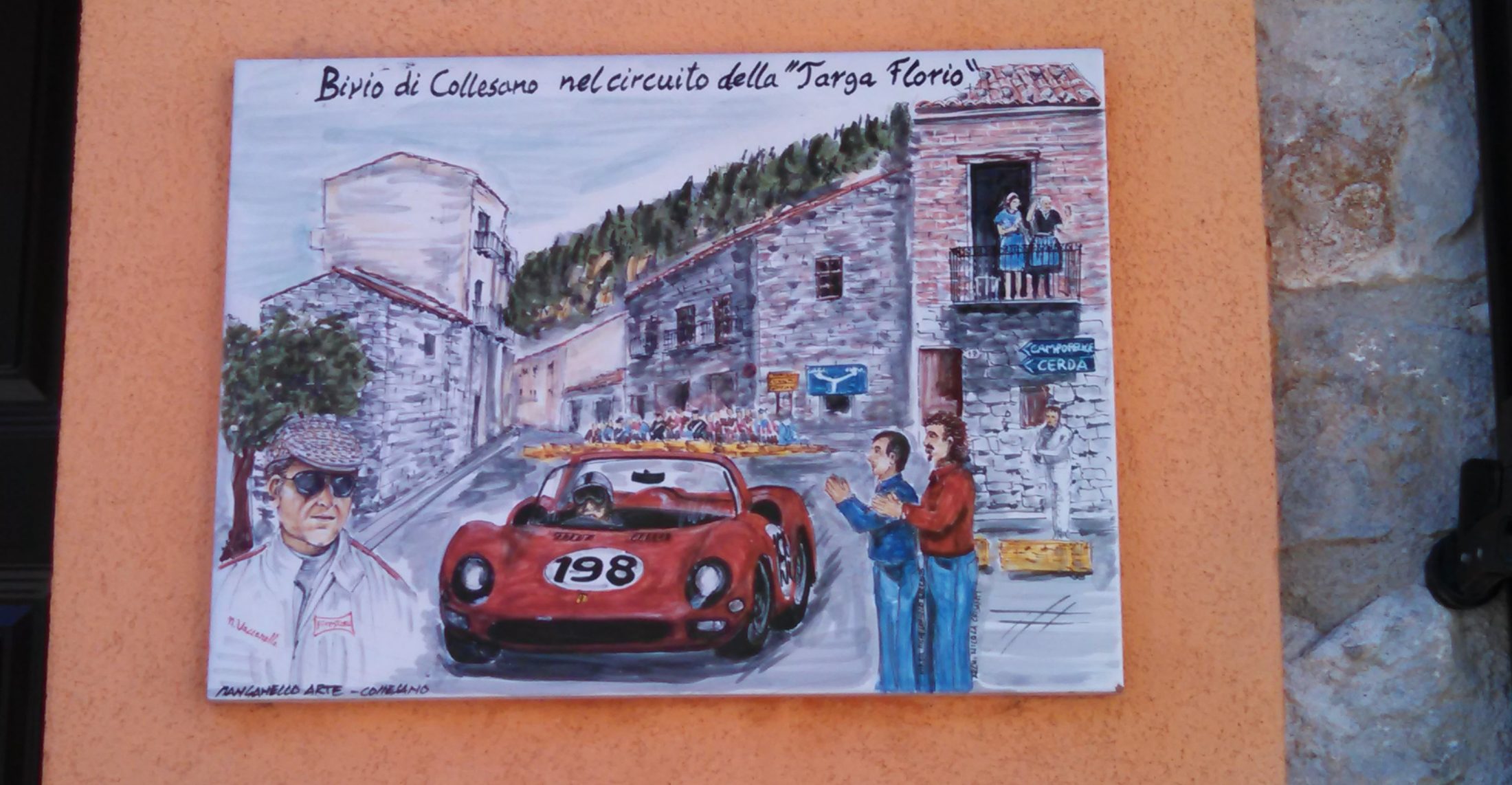
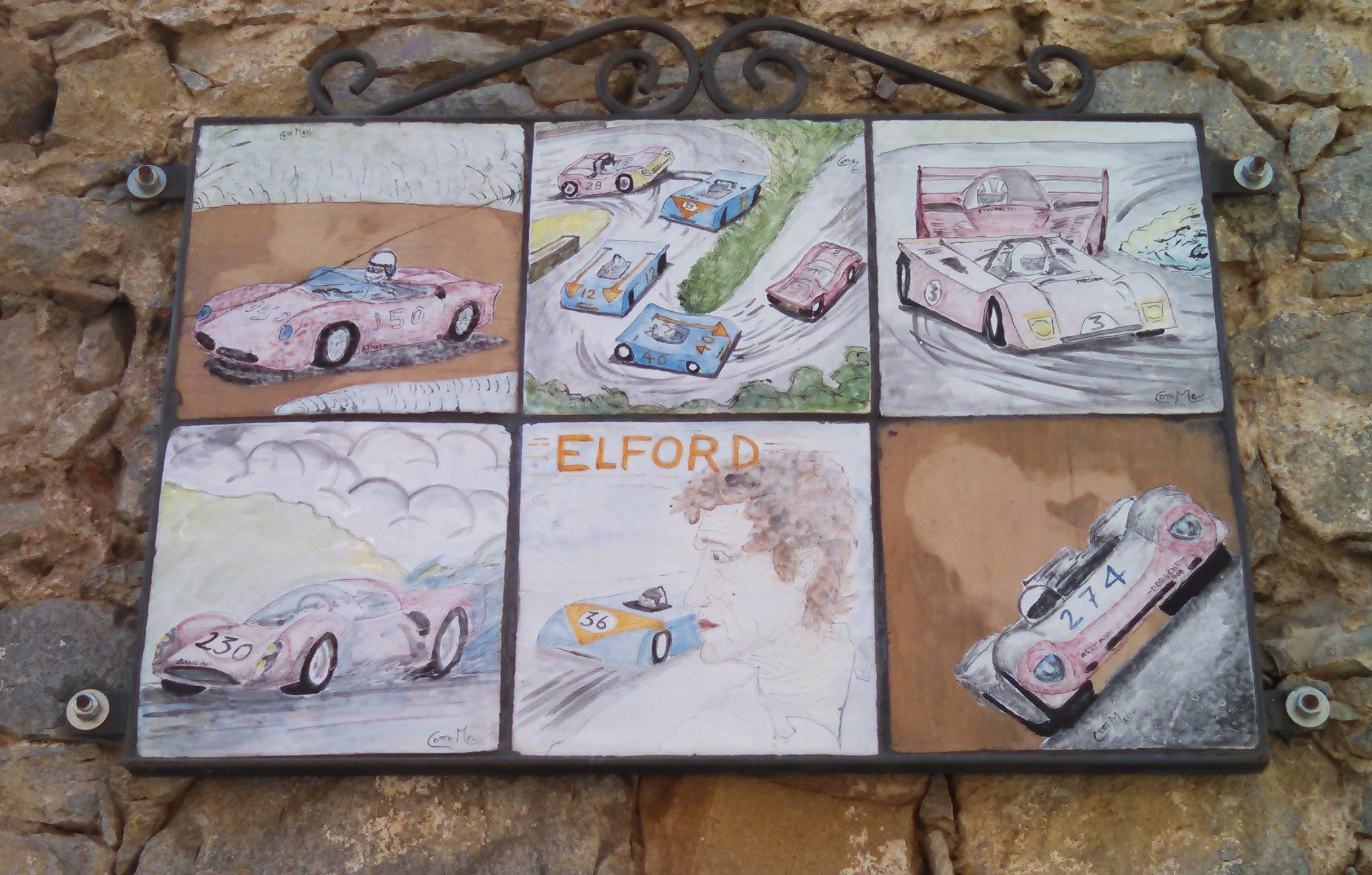
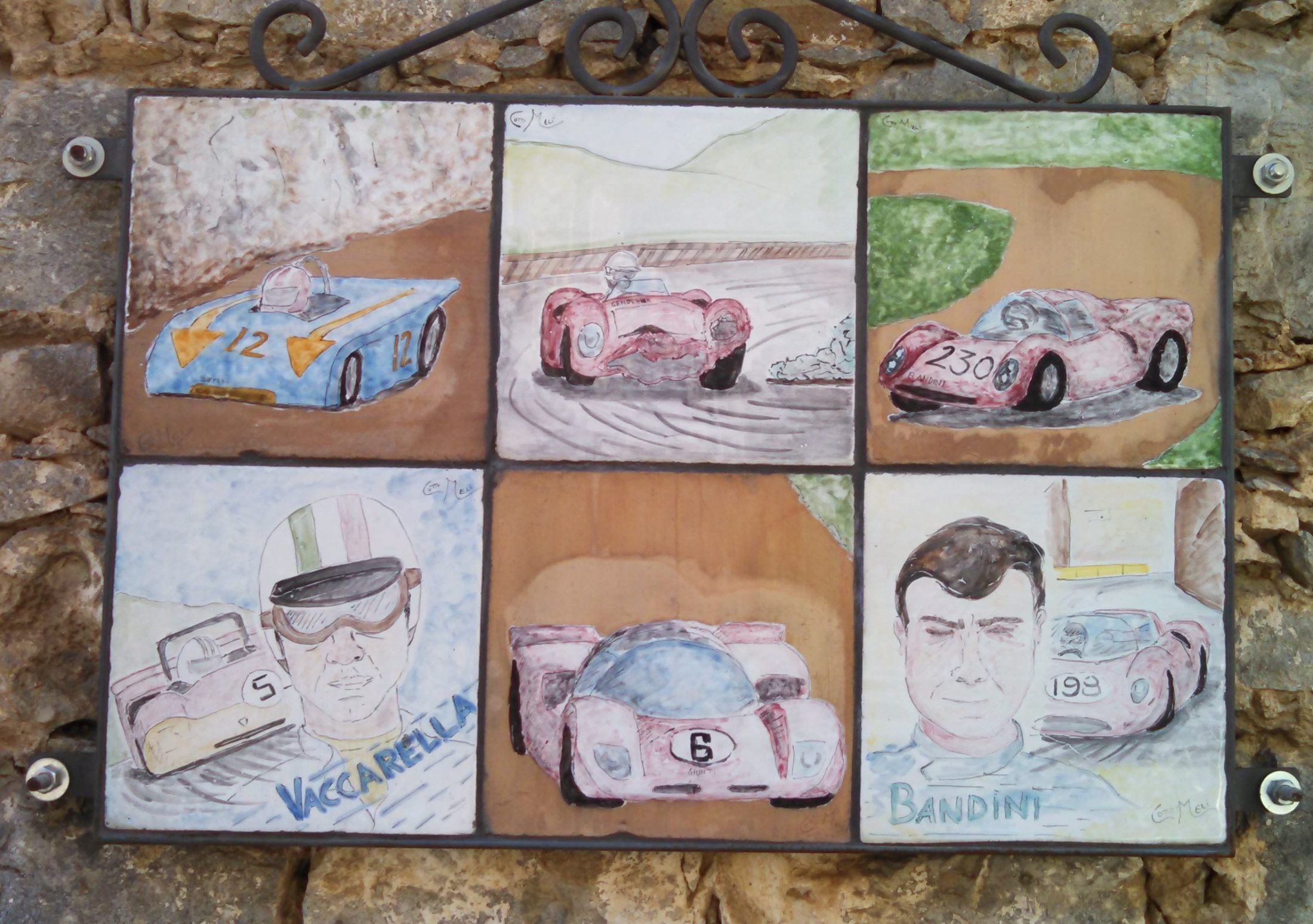
Descending into Collesano we were greeted by ceramic tiles - presumably by a local artist - commemorating notable Targa Florio drivers and their cars as we made our way to the Targa Florio museum in via Roma (all roads lead to Rome…) Unfortunately we had made much better time than expected arriving long before the museum's afternoon opening time of 15:30. (Italy's extended lunchtime closing cannot possibly be helping the tourist trade). Not wanting to cool our heels for a couple of hours, we strolled briefly around the town, finding more ceramic Targa art along with a 16th century church before heading off for the penultimate leg to Candofelice di Roccella on the coast. Shortly outside Collesano the road forked and we had to double back to follow what I believed to be the original route before re-joining local route 9 past Sant’ Agata[i] and descending to the coast road.
I dare say that Candofelice had developed a little in the last 50 years, and I'm not certain that we exactly followed the original route, but eventually we got ourselves back onto SS113 - the old costal road - where the route ran straight for nearly 6km (think: Bathurst in a straight line...) within a stone's throw of the beach. Here, no doubt, competitors would have had a rare opportunity to exploit the top end of their cars’ potential in an effort to shave a few seconds off their lap time. These days the road has a posted speed limit of 70km/h - largely ignored by the locals, as indeed are most speed limits in Italy - but it's not hard to imagine competitors maxing-out along here before turning left, up into the hills to the start/finish line.
Tempted as I was to carry on back to the start/finish line before Cerda, practical considerations dictated that we left the old straight where it crossed under the newer A19 highway for an easier run in the accumulating afternoon traffic. During the last few km back to our parking in central Palermo, I reflected on the drive just completed. Our drive time for the 72km lap was just under two hours for an average speed around 38km/h. The in-race lap record for the piccolo route was 33:41 by Helmut Marko in 1972 (Alfa Tipo 33, 3 litre) for an average speed around 128km/h. Certainly he would not have been contending with the multi-level, earthquake damaged roads we faced, but even with a relatively smooth surface and the knowledge that there was no traffic coming the other way, it was still an astounding effort.
Like the Mille Miglia in Italy’s north, this is an event whose memory is being kept alive by a small group of keen enthusiasts – and the odd Red Bull PR person[i] – and the hopes of a few historic rallyists keen to relive actual or imagined memories. The likelihood that the circuit could ever be repaired to “as raced” condition is negligibly small and time, weather and seismic activity will inevitably lead to ongoing deterioration of the roads.
So if you want to try a lap, you need to head to Sicily sooner rather than later, before the whole lot slips down into the valley below.
Michael Seidler
[1] I suspect the film in question was the 1972 production “The Speed Merchants” with Vic Elford narrating a 10 minute segment about the Targa Florio. It’s available on DVD but significant parts can be found online. It’s well worth a look.
[2] Not to be confused with Sant’ Agata outside Bologna, 1100km generally to the north-west of Sicily, where the Lamborghini factory is located. Curious at the appearance of Sant’Agata as both a location along the Targa Florio route and the home-town of Lamborghini, I wondered whether the eponymous Saint Agatha was the patron saint of motorsport. A little research showed that her story was much older and more gruesome than anything to do with cars and racing. Without going into the whole gory story here, she is one of the oldest saints in Italy (beatified in AD251) and is commemorated with townships called Sant’Agata all over the country.
[3] In early 2015 Red Bull undertook a publicity stunt with “our” Daniel Riccardo (whose family originated from Sicily) driving sections of the track in an Alfa Tipo 33/3 borrowed from a private collection. Not surprisingly, given the car’s vintage and value, he was limited to a few short sections where the road surface was approximately smooth. Video can be found online.